


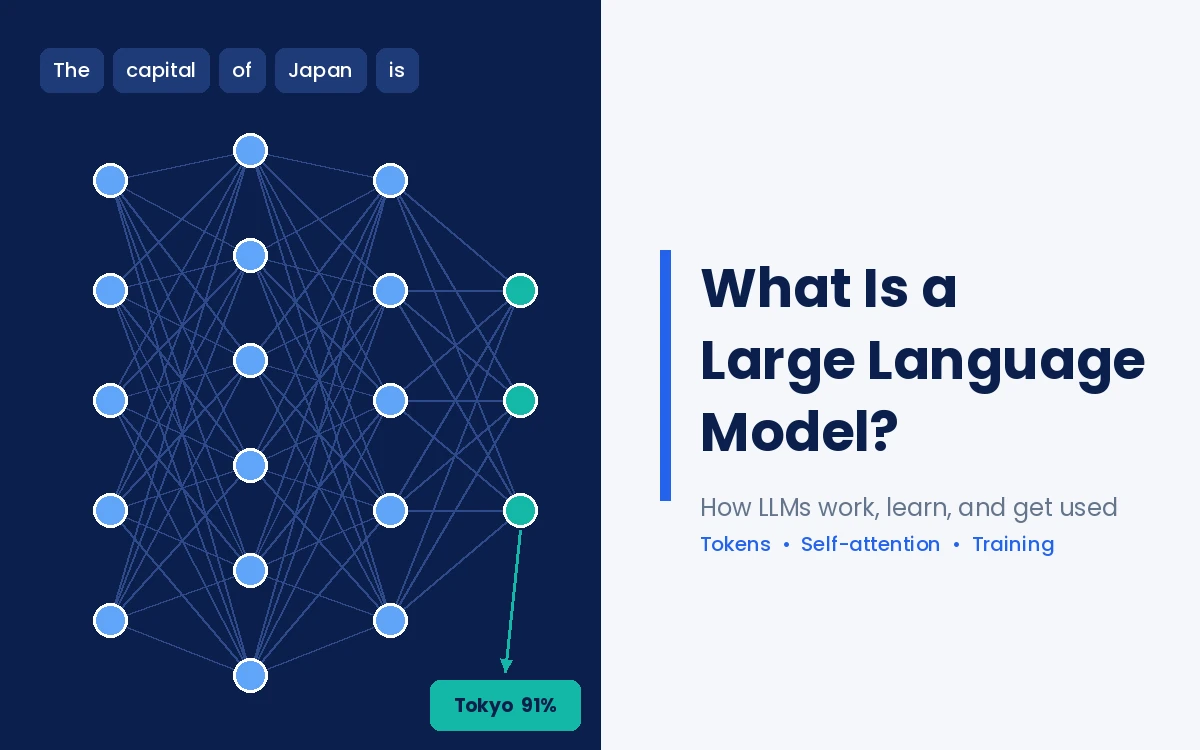
What is a large language model in plain terms? A large language model (LLM) is a neural network trained on vast text collections to predict the next token, so it can read and write human-like language. Chat assistants, coding copilots, translation apps, and enterprise search tools all run on this technology.
Most modern LLMs use the transformer architecture, a deep learning design that processes whole passages at once instead of one word at a time. The "large" part comes from billions of internal settings called parameters, which training adjusts until the model's predictions match real writing. Adoption has grown fast: in a February 2026 survey by the Pew Research Center, 44% of U.S. adults said they use ChatGPT, up from 18% in 2023.
LLMs translate languages, summarize reports, answer questions, write code, and power customer chatbots. They do not look facts up in a database, though. Every answer comes from patterns absorbed during training, so a model can sound confident while being wrong.
Knowing the LLM architecture, training methods, and limits helps a team judge where they add value and where ordinary software still works better.
Key Takeaways
- An LLM predicts the next token from patterns in text.
- Self-attention lets transformers track context across long passages.
- "Large" means billions of parameters and trillions of training tokens.
- Training moves through pretraining, fine-tuning, and human feedback.
- ChatGPT is an app; GPT models are the LLMs underneath.
- Hallucination, bias, privacy, and energy use remain real limits.
- Businesses adapt LLMs with prompting, RAG, fine-tuning, or tool calling.
What Does Large Language Model Mean?
The large language model definition is an AI language model that learns the patterns of human language from huge text datasets and uses them to generate text. LLM stands for large language model, so the LLM meaning in AI points to this specific class of deep learning model. To define large language model in one line, call it a next-token predictor trained at massive scale.
Outside technology, LLM also abbreviates the Master of Laws degree, so context matters for the question "what does LLM mean?" Teachers who need to define LLM for students often compare it to phone autocomplete, which predicts words the same way at a far smaller scale.
What are large language models in daily practice? They are the engines behind chat assistants, writing tools, coding copilots, and enterprise search. A single LLM model can classify the sentiment of a review, translate a contract clause, and draft a product description without a separate system for each job.
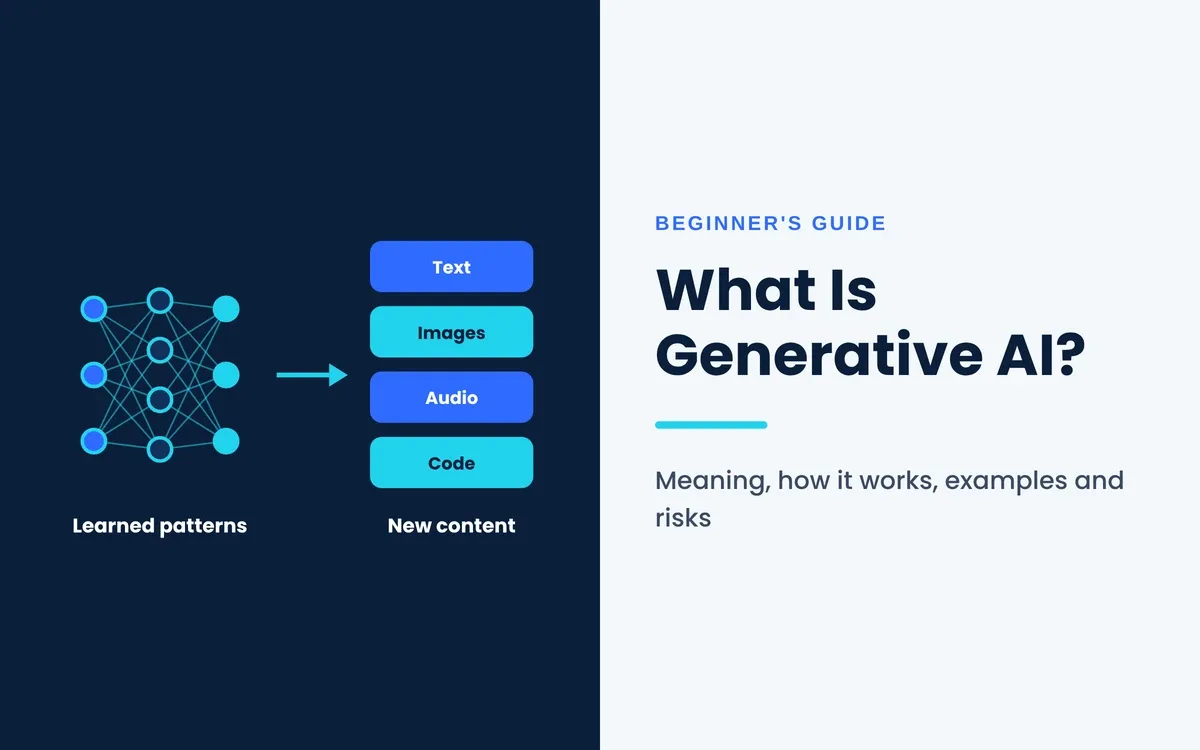
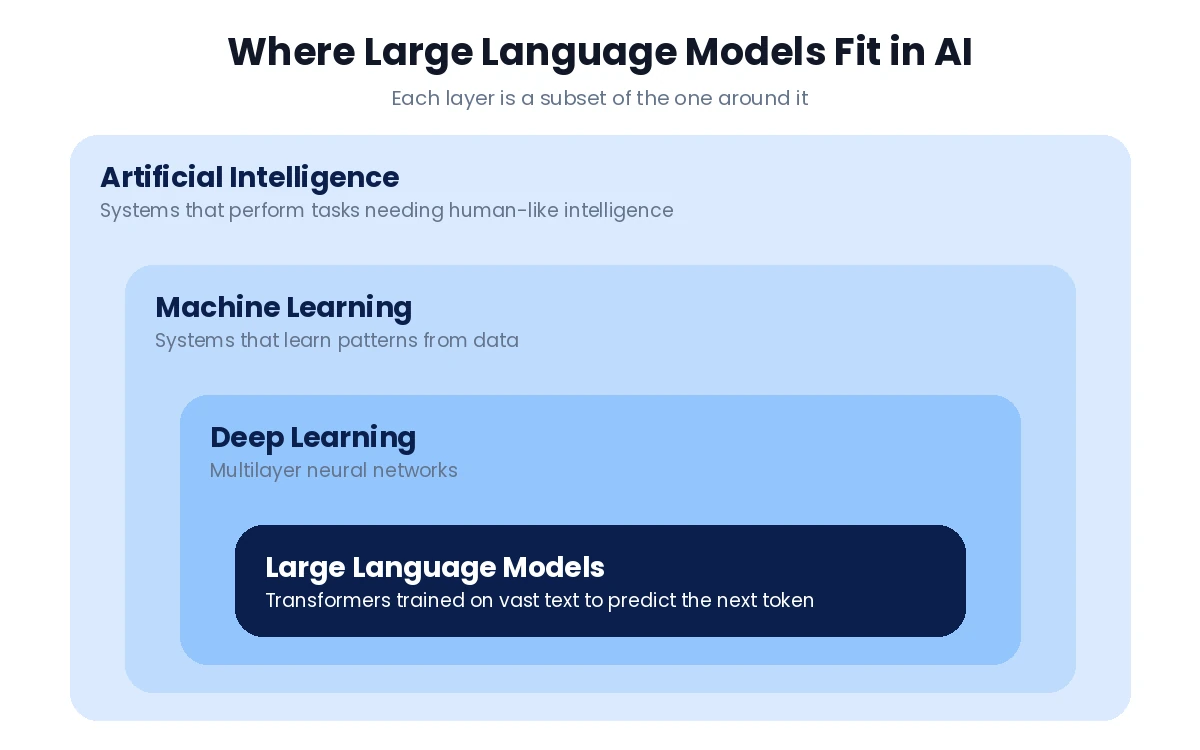
Large language models sit inside a nested family of technologies. The field of artificial intelligence is the broadest layer, and machine learning is the branch where systems learn from data instead of fixed rules. Deep learning narrows that further to multilayer neural networks, while LLMs are deep learning models specialized for language. Our breakdown of AI vs machine learning explains those outer layers in more detail.
Within natural language processing (NLP), the field that teaches computers to work with human language, LLMs have replaced many older task-specific tools. Earlier NLP systems needed one model for translation, another for tagging grammar, and a third for answering questions.
What Makes a Language Model "Large"?
"Large" refers to two measurements: the number of parameters inside the model and the volume of text used to train it. Parameters are the numeric weights a model adjusts while it learns, a concept our guide to AI models covers alongside hyperparameters.
No official threshold separates large models from small ones. The BERT paper described a 340-million-parameter model in 2019, which counted as large at the time. GPT-3 raised the bar to 175 billion parameters, as reported in the GPT-3 paper, and most current frontier developers no longer publish exact counts.
Large models also need large data, so developers train them on trillions of tokens drawn from web pages, books, code, and licensed datasets. Every data collection decision therefore shapes what the finished model knows.
Is It a Large Language Model or a Language Learning Model?
The correct term is large language model; "language learning model" is a common mix-up. Searches for language learning models, a learning language model, or large learning models almost always refer to the same technology. The confusion is understandable, since these systems do learn language, but the industry name stresses scale rather than the learning process.
How Do Large Language Models Work?
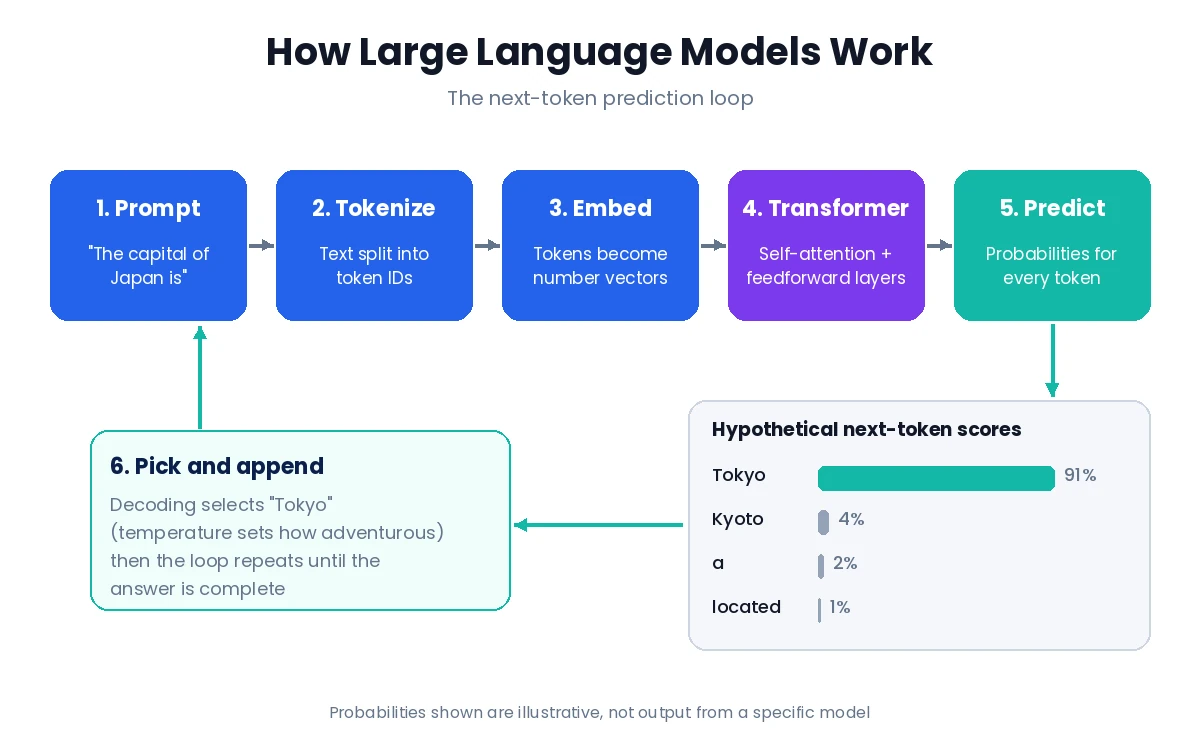
An LLM splits text into tokens, turns them into numbers, weighs how the tokens relate through self-attention, and predicts the most likely next token. The model repeats that step, one token at a time, until the reply is finished.
How does a large language model work at a technical level? A plain LLM explanation needs five ideas: tokens, embeddings, self-attention, next-token prediction, and the context window. The stages below show how large language models work, from raw text to a finished answer.
Tokens: The Units an LLM Reads and Writes
A token is a chunk of text, such as a whole word, part of a word, a number, or a punctuation mark. Tokenizing the word "unbelievable" might produce pieces like "un," "believ," and "able," depending on the tokenizer's vocabulary.
Every model works from a fixed vocabulary, often tens of thousands of tokens or more, and all input and output passes through it. API pricing, speed limits, and memory limits for LLM services are usually measured in tokens rather than words.
Embeddings Turn Tokens Into Numbers
An embedding is a list of numbers that represents a token's meaning, placing related words close together in a mathematical space. In a trained model, "doctor" and "nurse" end up nearer each other than "doctor" and "volcano."
Positional encodings then add information about word order to each embedding. Without them, the sentence "dog bites man" would look identical to "man bites dog."
How Does Self-Attention Build Context?
Self-attention lets each token look at every other token in the input and decide which ones matter most for its meaning. In the sentence "The trophy did not fit in the suitcase because it was too big," attention helps the model connect "it" to "trophy" rather than "suitcase."
The mechanism comes from Attention Is All You Need, the 2017 paper on arXiv that introduced the transformer. Earlier recurrent neural networks read text one word at a time and lost track of distant words, whereas transformers process an entire sequence in parallel.
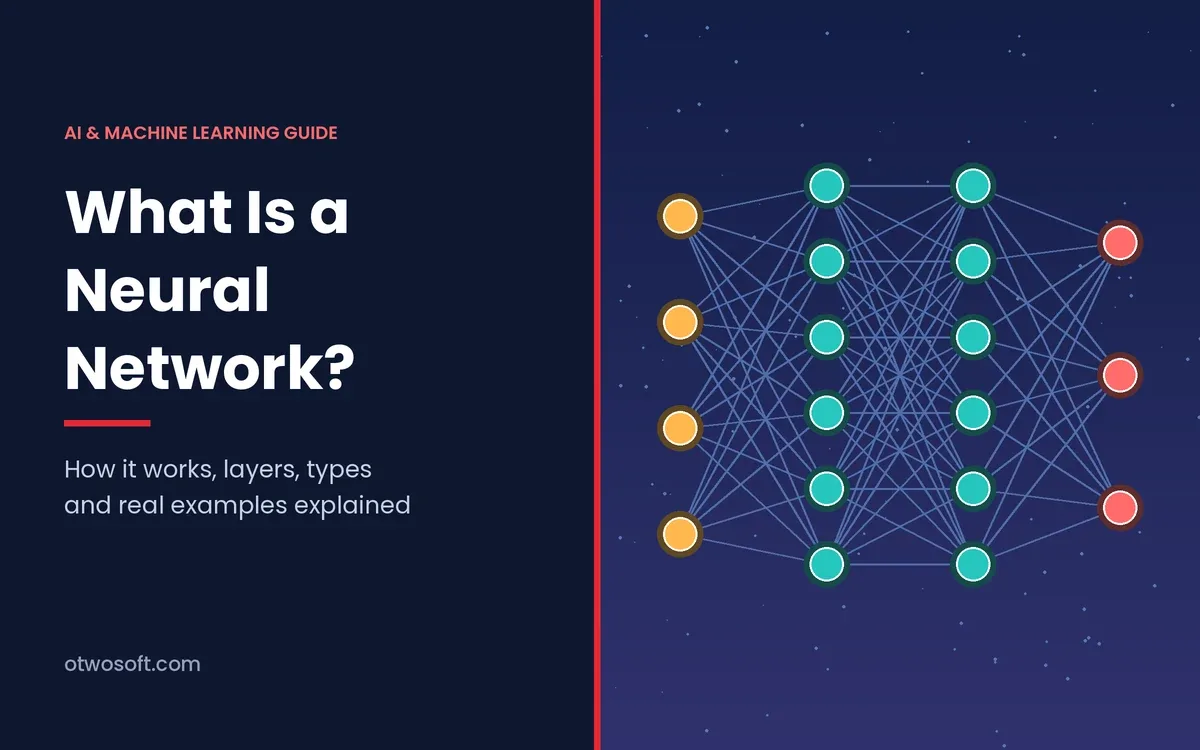
After attention, feedforward neural networks inside each transformer layer refine every token's representation. Large models stack dozens of these layers, with early layers capturing spelling and grammar while later layers capture broader meaning. Our neural network guide walks through those layers, weights, and backpropagation in depth.
Predicting the Next Word, One Token at a Time
At the final layer, the model scores every token in its vocabulary and converts those scores into probabilities for the next position. A decoding step picks one token, appends it to the text, and runs the whole process again with the longer sequence.
The loop explains why chat answers appear word by word on screen. A setting called temperature controls how adventurous each pick is. Low temperature favors the top-ranked token for predictable output, while a higher value samples lower-ranked tokens for more varied, creative writing.
What Is a Context Window?
The context window is the maximum number of tokens an LLM can consider at once, covering both your prompt and its reply. Anything outside the window is invisible to the model during that request.
Early transformer models handled a few thousand tokens, while many current models accept hundreds of thousands, enough for a long report or a sizable codebase. An LLM keeps no memory between separate conversations unless the surrounding application stores the history and feeds it back into the window.
How Does an LLM Answer a Prompt? A Worked Example
Understanding LLM behavior is easiest when you follow one short prompt from input to output. The probabilities below are a simplified, hypothetical illustration rather than output from a specific model.
- Input. A user types "The capital of Japan is" into a chat box.
- Tokenizing. The tokenizer splits the text into about five tokens and maps each one to an ID number.
- Embedding and attention. The model links "capital" with "Japan" and recognizes a fact-completion pattern it saw thousands of times in training.
- Scoring. The final layer assigns a probability to every candidate token in the vocabulary.
- Selection. At low temperature, the model picks "Tokyo," appends it, and repeats the loop to decide whether a period or a new sentence follows.
| Candidate next token | Hypothetical probability |
|---|---|
| Tokyo | 91% |
| Kyoto | 4% |
| a | 2% |
| located | 1% |
| All other tokens combined | 2% |
The model never checked Japan's capital in a database. The answer came from patterns learned during training, and the same mechanism produces fluent but wrong answers when training data on a topic is thin or contradictory.
How Are LLMs Trained?
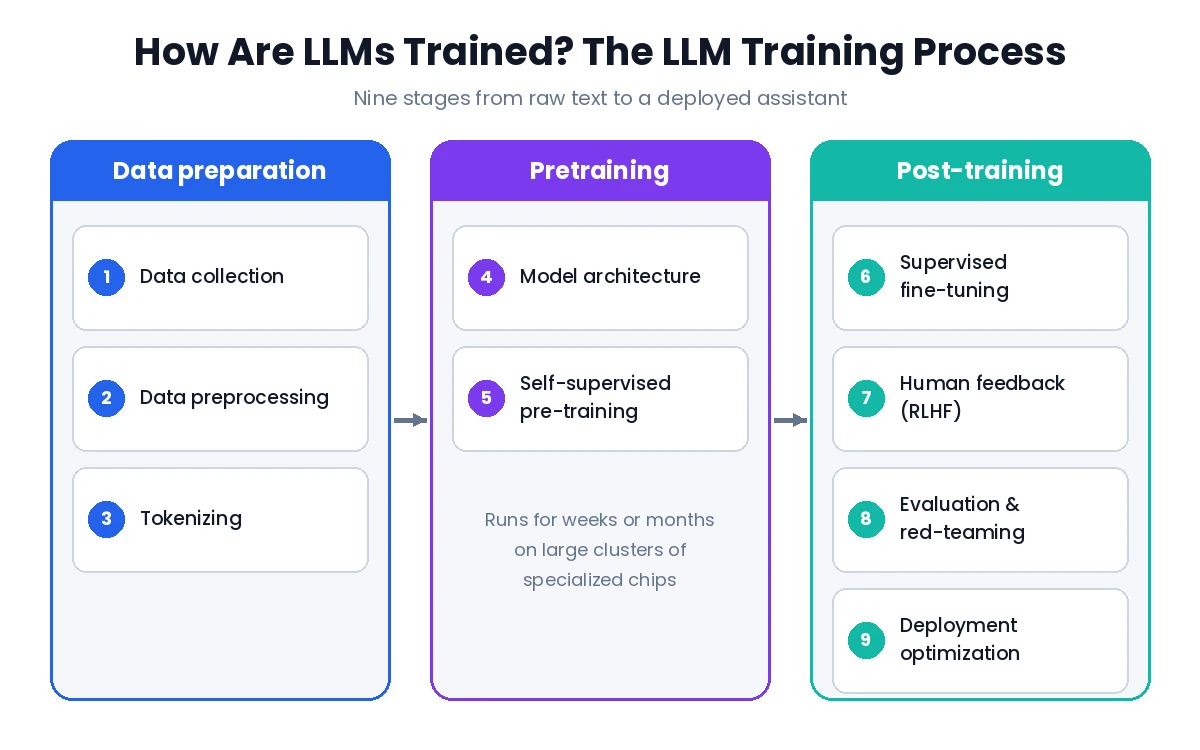
LLMs are trained in stages: self-supervised pretraining on raw text builds general language skill, then fine-tuning and human feedback shape the model into a useful assistant. AI language model training at the frontier scale runs for weeks or months on large clusters of specialized chips.
How are large language models trained step by step? The sequence below shows each stage of large language model training, from raw data to deployment.
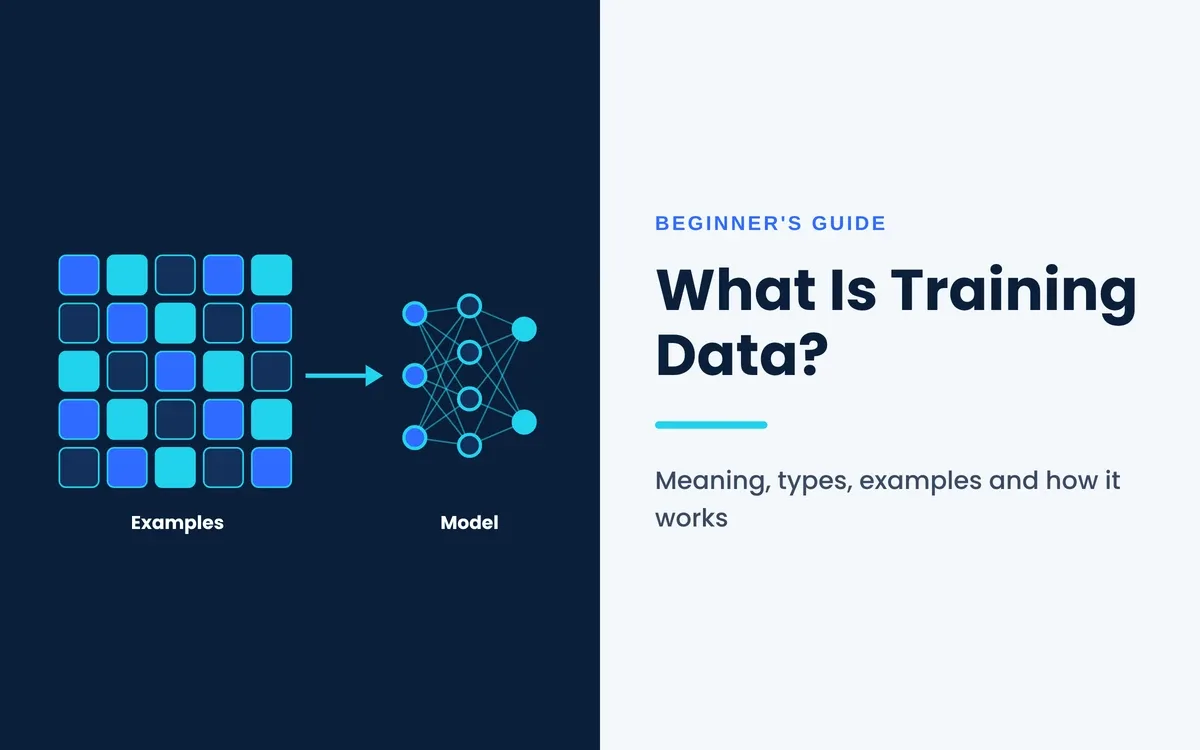
- Data collection. Teams gather text from public web pages, books, academic papers, code, and licensed sources. Our guide to training data covers sourcing and labeling for machine learning in general.
- Data preprocessing. Engineers remove duplicates, spam, personal information, and low-quality pages, then filter for language and toxicity. Cleaner data reduces memorization and lowers the risk of harmful output.
- Tokenizing. A tokenizer built from the cleaned corpus converts every document into token IDs the network can process.
- Model architecture. Developers choose the transformer design, including layer count, attention heads, context length, and total parameters, based on budget and goals.
- Unsupervised pre-training. The model reads billions of passages and predicts each next token. Backpropagation measures every wrong guess through a loss function and nudges the weights to shrink future errors. No human labels are required, which is why researchers call this stage self-supervised learning.
- Supervised fine-tuning. Human-written examples of strong questions and answers teach the base model to follow instructions, a step often called instruction tuning.
- Alignment with human feedback. Reviewers rank several answers to the same prompt, and reinforcement learning from human feedback (RLHF) trains the model to prefer helpful, honest, safer responses.
- Evaluation and red-teaming. Teams test the model on benchmarks, measure bias, and run adversarial testers who try to provoke harmful output before release.
- Deployment optimization. Techniques such as quantization and distillation shrink the model so it answers faster and costs less to run.
Good LLM training process design also keeps separate data for checking progress, a practice our article on training, validation, test data explains. Engineers watch for overfitting as well, where a model memorizes training passages instead of learning general patterns.
Why Do Bigger Models Perform Better?
Bigger models trained on more data usually perform better because extra parameters let them store richer patterns of language and knowledge. Researchers call the predictable relationship between model size, data volume, compute, and performance a scaling law.
The GPT-3 research also showed a striking side effect of scale called few-shot learning. Given only a handful of examples inside the prompt, a large model could perform a new task without any retraining. Zero-shot inference goes a step further, with the model completing a task from plain instructions alone, a behavior known more broadly as in-context learning.
Some skills, such as multi-step arithmetic, appeared to switch on only after models crossed a certain size. An explainer from CSET at Georgetown describes these emergent abilities in detail. The same explainer notes an open debate, because some researchers argue the sudden jumps partly reflect how benchmarks score answers.
Scale has costs as well, since larger models are more expensive to train, slower to respond, and harder to serve. They still make factual errors, so many teams now pair smaller models with better data or document retrieval.
How Do LLMs Compare With NLP, Generative AI, and Foundation Models?
An LLM is one type of foundation model, a branch of generative AI, and the leading technique within natural language processing today. The terms overlap heavily, which is why articles often use them interchangeably.
| Term | What it covers | Relationship to LLMs |
|---|---|---|
| Artificial intelligence | Systems that perform tasks needing human-like intelligence | The broadest category; LLMs are one AI approach |
| Machine learning | Systems that learn patterns from data | LLMs are machine learning models trained on text |
| Natural language processing | Computing methods for human language, from rules to neural networks | LLMs are the dominant modern NLP technique |
| Generative AI | Models that create text, images, audio, video, or code | LLMs form the text-focused branch |
| Foundation model | A model pretrained on broad data, then adapted to many tasks | Most LLMs are foundation models; some foundation models handle only images |
| Small language model | A compact model with far fewer parameters | Same transformer design, scaled down for phones or private servers |
The LLM machine learning connection runs deep, since every LLM is a statistical model shaped by data. Readers who want the wider categories can start with our guides to machine learning, generative AI, and generative vs predictive AI.
What Types of Large Language Models Exist?
AI language models are usually grouped by architecture, by training stage, by access model, and by the kinds of input they accept.
Types by Architecture
- Encoder-only models such as BERT read text in both directions and suit classification, search ranking, and sentiment analysis.
- Decoder-only models such as the GPT family generate text left to right and power most chat assistants. Researchers call these autoregressive language models because each new token depends on the ones before it.
- Encoder-decoder models such as T5 convert one sequence into another, which fits translation and summarization work.
Types by Training Stage
- Base models finish pretraining only, so they continue text rather than follow instructions.
- Instruction-tuned models receive extra fine-tuning that teaches them to carry out requests.
- Chat models are tuned for multi-turn conversation and safer behavior.
- Reasoning models spend extra computation working through intermediate steps before answering, which helps on math and coding problems.
Types by Access and Input
- Closed models are available only through an app or API, so the developer keeps the weights private.
- Open-weight models such as Llama, Mistral, and Falcon publish their weights, letting companies run them on their own servers.
- Multimodal models accept images, audio, or video alongside text, so they can describe a chart or transcribe a meeting.
- Small language models trade some capability for speed, lower cost, and on-device privacy.
What Are Some Large Language Model Examples?
Well-known large language model examples include the GPT series, Claude, Gemini, Llama, Mistral, BERT, and T5. The table compares widely documented model families by first release year, architecture, and access.
| Model family | First released | Architecture | Weights |
|---|---|---|---|
| BERT | 2018 | Encoder-only transformer | Open |
| T5 | 2019 | Encoder-decoder transformer | Open |
| GPT-3 | 2020 | Decoder-only transformer | Closed |
| PaLM | 2022 | Decoder-only transformer | Closed |
| BLOOM | 2022 | Decoder-only transformer | Open |
| GPT-4 | 2023 | Transformer, details unpublished | Closed |
| Claude | 2023 | Transformer, details unpublished | Closed |
| Gemini | 2023 | Multimodal transformer | Closed |
| Llama | 2023 | Decoder-only transformer | Open weights |
| Mistral 7B | 2023 | Decoder-only transformer | Open weights |
| Falcon | 2023 | Decoder-only transformer | Open weights |
Most LLM models ship new versions every few months, so large language model news moves quickly. Developers keep releasing advanced large language models with longer context windows, built-in reasoning modes, and native image and audio input. Teams that build products on these models track large language model updates closely, since a version change can shift output quality, behavior, or pricing.
Is ChatGPT an LLM?
ChatGPT is a chatbot application that runs on the GPT family of large language models, so the app itself is not the LLM. People asking what is an LLM often point to ChatGPT first, which explains the frequent mix-up. The product adds a chat interface, conversation history, safety filters, file handling, and tools such as web search on top of the underlying model.
What Are LLMs Used For?
LLMs handle almost any task that involves reading, writing, or transforming language, from customer chatbots to code generation. Companies adopting AI large language models usually start with one narrow use case, and the most common ones include:
- Chatbots and virtual assistants answer customer questions around the clock and hand complex cases to human staff.
- Content creation produces first drafts of emails, product descriptions, and marketing copy that editors then refine.
- Text summarization condenses long reports, legal filings, and meeting transcripts into short briefs.
- Language translation converts documents and support tickets while keeping tone closer to the original than older phrase-based systems.
- Question answering over company documents helps employees find policies without digging through shared drives.
- Sentiment analysis sorts reviews and social posts by tone so teams can spot complaints early.
- Code generation suggests functions, writes tests, and explains unfamiliar code to developers.
- Automated reporting turns structured data, such as weekly sales figures, into readable narrative summaries.
- Creative writing supports brainstorming for stories, scripts, and slogans.
- AI agents combine an LLM with software tools so the system can plan steps, call APIs, and finish multi-step tasks.
How Can a Business Adapt an LLM to Its Own Data?
Businesses adapt LLMs through four methods: prompt engineering, retrieval-augmented generation (RAG), fine-tuning, and tool calling. Each method changes cost, effort, and accuracy in a different way.
- Prompt engineering shapes behavior through instructions and examples placed in the prompt. The approach costs least and needs no training, although the model's knowledge stays frozen at its training cutoff.
- Retrieval-augmented generation searches your documents at question time and places the relevant passages inside the context window. The model then answers from current company data, which reduces hallucinations and keeps sources traceable. Our article on enterprise knowledge bases explains how teams prepare documents for retrieval.
- Fine-tuning retrains the model on a smaller, task-specific dataset so it learns a format, tone, or specialist vocabulary. Transfer learning makes the process efficient, because the model reuses everything it absorbed during pretraining.
- Tool calling lets the model trigger functions, such as checking inventory or booking a meeting, so answers draw on live systems instead of memory.
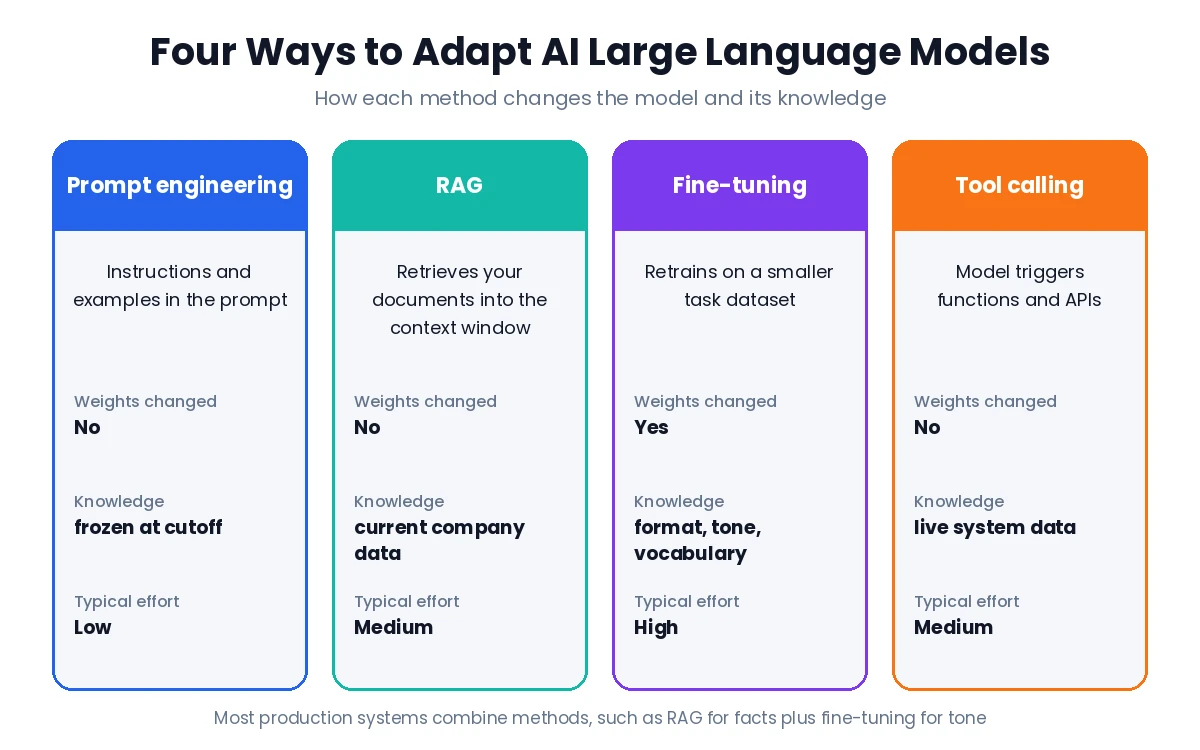
Most production systems combine methods, for example RAG for facts plus light fine-tuning for brand voice. The O2SOFT team designs these pipelines through its AI development services, and our custom software development practice connects them to existing CRMs, ERPs, and web applications.
What Are the Limitations and Risks of LLMs?
The main LLM limitations are hallucinations, bias, privacy and copyright exposure, misuse, heavy computational cost, and unclear accountability. Each risk can be managed, but none disappears through scale alone.
Hallucinations
An LLM predicts plausible text, so it sometimes states false facts, invented citations, or wrong figures with full confidence. Grounding answers in retrieved documents and requiring human review for high-stakes output lowers the risk considerably.
Bias and Fairness
Models absorb stereotypes present in their training data and can repeat them in hiring, lending, or medical contexts. Bias mitigation combines data filtering, balanced fine-tuning examples, human feedback, and regular fairness audits.
Privacy and Intellectual Property Rights
Training sets can contain personal information or copyrighted text, and models occasionally reproduce memorized passages word for word. Copyright claims over training data are still moving through the courts, so legal teams now review both data sources and how generated output gets used.
Deepfakes, Disinformation, and Spam
The same fluency that drafts a helpful email can mass-produce disinformation, phishing messages, or spam at almost no cost. Multimodal models extend the problem to synthetic voices and deepfakes, so providers rely on content moderation, usage policies, and watermarking research.
Computational Resources and Energy
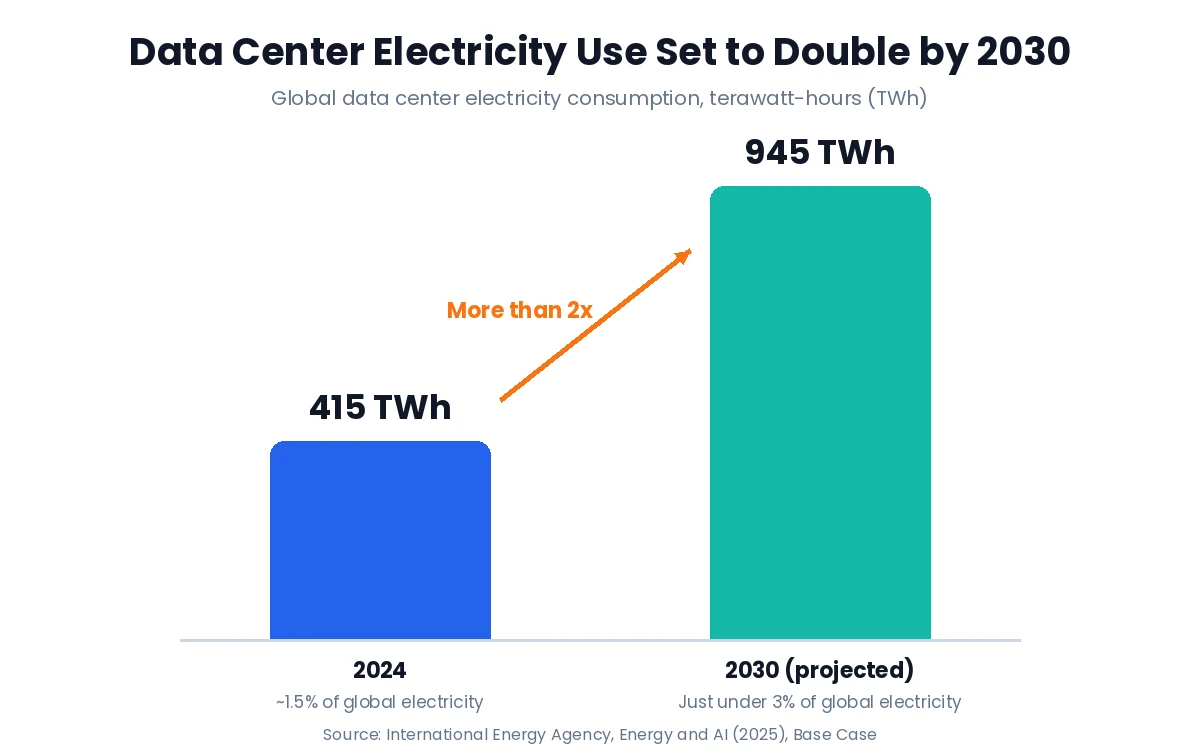
Training large language models and running them consumes significant electricity and specialized hardware. The International Energy Agency estimates that data centers used about 415 terawatt-hours in 2024, roughly 1.5% of global electricity. The agency projects demand of around 945 TWh by 2030, with AI as the most important driver of that growth.
Accountability, Safety, and Regulation
When an LLM gives harmful advice, responsibility can blur between the model developer, the deploying company, and the user. Two public frameworks now address that accountability gap for developers and deployers. The Generative AI Profile from NIST, published in July 2024, maps generative AI risks to practical controls. In Europe, the EU AI Act has applied transparency and documentation duties to general-purpose AI models since August 2, 2025. Our article on AI transformation governance covers how companies build oversight around these rules.
When Should You Not Use an LLM?
Skip an LLM when a task needs guaranteed exact answers, strict auditability, or zero tolerance for error. Payroll calculations, tax rules, and safety-critical controls run better on deterministic code. LLMs also lack direct experience of the world, so complex reasoning about novel, high-stakes situations still needs human judgment.
How Did Large Language Models Develop?
LLMs grew out of decades of statistical language modeling, then accelerated sharply after the transformer arrived in 2017.
- Before 2010: n-gram models predicted the next word from the previous two or three words, with limited context.
- Early 2010s: recurrent neural networks and LSTMs carried longer context, while word embeddings captured meaning as vectors.
- 2017: the transformer replaced recurrence with self-attention and made massive parallel training practical.
- 2018 to 2019: BERT and GPT-2 showed that pretraining on raw text, followed by fine-tuning, beat task-specific systems.
- 2020: GPT-3 demonstrated few-shot learning at a scale no earlier model had reached.
- November 2022: ChatGPT brought LLMs to the general public and set off rapid adoption.
- 2023 onward: open-weight models, multimodal input, million-token context windows, and reasoning models widened what LLMs can do.
For the wider story, see our history of artificial intelligence and the long rivalry described in symbolic vs connectionist AI.
Conclusion
The answer to what is a large language model comes down to one mechanism: a transformer network that predicts the next token from patterns in vast text. Tokens, embeddings, and self-attention give the model context, while pretraining, fine-tuning, and human feedback turn raw prediction into a useful assistant.
The same design brings real limits, including hallucinations, bias, and heavy computing demands. The strongest results come from pairing LLMs with retrieval, clear guardrails, and human review on decisions that matter.
O2SOFT helps companies plan and build LLM products, following a structured delivery process from discovery to launch. Teams with a specific use case can contact our team to scope the right mix of prompting, RAG, and fine-tuning for their data.
Frequently Asked Questions
What does LLM stand for in AI?
LLM stands for large language model, a term AI researchers use for language-focused deep learning systems. Such models train on huge text datasets to understand and generate natural language, usually with a transformer architecture.
What is LLM in AI and how does it work?
An LLM is an AI model built for language tasks. The model converts your text into tokens, uses self-attention to understand context, and writes a reply by predicting one token at a time.
How is an LLM different from a chatbot?
An LLM is the underlying model that generates language. A chatbot is the application people talk to, which may run on an LLM and adds memory, interface features, and business rules on top.
Can a large language model think or understand?
LLMs model statistical patterns in language rather than thinking the way people do. They handle many complex reasoning tasks impressively, yet they lack lived experience and can fail on simple questions outside their training patterns.
How does LLM training work?
LLM training works in two broad phases that build on each other. Pretraining teaches next-token prediction on raw text, then fine-tuning and human feedback teach the model to follow instructions and give safer, more helpful answers.
Do LLMs learn from my conversations?
A deployed model does not update its weights during your chat. Some providers use conversation data to train future versions unless you opt out, so review each service's data policy before sharing sensitive information.
What is the difference between an LLM and an SLM?
A small language model uses the same transformer design with far fewer parameters, often a few billion or less. SLMs run on laptops or phones at low cost, while LLMs handle broader and harder tasks.
Are large language models the same as AI?
Large language models are one type of AI rather than the whole field. Artificial intelligence also includes computer vision, recommendation engines, robotics, and predictive models that never process language.